Dubai's real estate market is firing on all cylinders in 2026. But for every investor who's made a fortune on residential apartments, another has quietly outperformed them with a well-placed commercial unit. The real question isn't which asset class wins outright, it's which one wins for you.
This guide cuts through the noise. We've combined the latest data from the Dubai Land Department (DLD), Q1 2026 market reports, and CRC Property's own on-the-ground intelligence to give you a clear-eyed comparison of commercial vs residential property investment in Dubai. Covering yields, capital appreciation, entry costs, liquidity and risk.
Market Pulse, Q1 2026: Dubai's real estate sector recorded AED 252 billion in total transactions, a 31% year-on-year surge in value and 6% rise in volume, according to the Dubai Land Department. Both local and international investor confidence is at a multi-year high.
The Dubai Property Market in 2026: Setting the Scene
Dubai's real estate story in 2026 is one of maturation. After a blistering growth run through 2023–2025, a total of 275,442 transactions worth AED 917 billion in 2025 alone, both all-time records the market is entering a quality-driven phase. Momentum investing is giving way to precision. That makes understanding asset-class fundamentals more important than ever.
Dubai's population crossed 4 million in August 2025, growing at 6.1% year-on-year (one of the fastest rates globally, with approximately 92% being expatriates and the government targeting 5 million residents by 2030). This demographic engine powers demand on both sides of the market.
The investor base expanded to 48,448 in Q1 2026, an 8% increase, including 29,312 new investors, up by 14%, demonstrating the market's ability to attract a diverse range of investors both locally and internationally.
Defining the Asset Classes
What Is Commercial Property in Dubai?
Commercial real estate in Dubai covers any property leased for business purposes. This includes Grade-A offices in DIFC, Business Bay, and JLT; retail units in high-footfall malls and high streets; logistics warehouses in Jebel Ali, Dubai Investment Park and Al Quoz; and co-working spaces and business centres increasingly popular across the city's free zones.
Commercial leases in Dubai often span 3 to 10 years, compared to a residential lease which is most likely renewed after every year therefore providing stable, predictable cash flow and reducing the risk of frequent vacancies.
What Is Residential Property in Dubai?
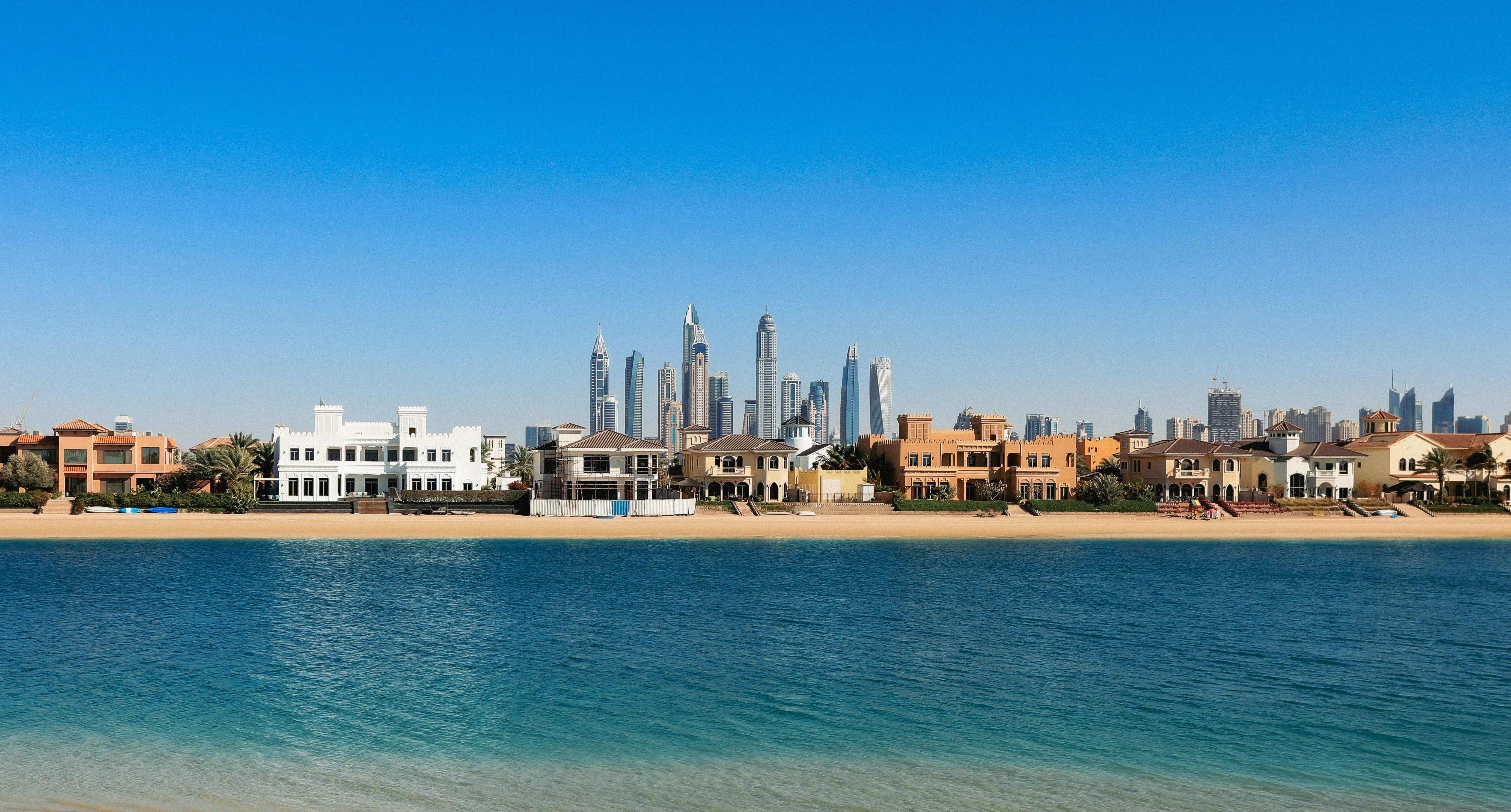
Residential property encompasses apartments, townhouses and villas leased or sold for personal habitation. Dubai's residential market is driven by professionals, families and entrepreneurs relocating for employment opportunities, business expansion and lifestyle benefits, with properties ranging from affordable studios to luxury waterfront villas.
Short-term rental (Airbnb-style) has emerged as a powerful sub-category for residential investors, particularly in tourist zones, where yields can significantly exceed standard annual leases.
ROI Comparison: The Numbers in 2026
Return on Investment (ROI) measured as gross annual rental yield against purchase price, is the primary lens most investors use to compare asset classes. Here's where the two stand in mid-2026:
| Factor | Commercial | Residential |
|---|---|---|
| Average Gross Yield | 8–12% | 5–8% |
| Prime Asset Yield | Up to 12–15% (DIFC offices, prime retail) | Up to 9% (JVC, Arjan studios) |
| Office Space Avg. ROI | ~8.5% | — |
| Warehouse/Industrial ROI | ~7–9% | — |
| Typical Lease Term | 3–10 years | 1 year (renewable) |
| Minimum Entry Price | AED 1.5M+ | AED 650,000+ |
| Liquidity | Lower (fewer buyers) | Higher |
| Mortgage Accessibility | Limited (50–60% LTV) | Easier (up to 75–80% LTV) |
| Tenant Maintenance Liability | Usually tenant's responsibility | Usually landlord's responsibility |
| Tax on Rental Income | None | None |
While the average ROI for residential real estate in Dubai hovers around 7–8%, commercial properties can yield returns of up to 11–12%. Office spaces average 8.5% ROI, retail spaces around 7.5% and warehouses approximately 7%.
Commercial Property: The Case for Higher Returns
On paper, commercial wins the yield battle. But understanding why is what separates disciplined investors from those chasing headline figures.
Advantages:
- Superior gross yields, typically 8–12% vs residential's 5–8%
- Long lease terms (3–10 years) mean stable, predictable cash flow
- Tenants often cover maintenance, fit-outs and utilities
- Lower management burden once tenanted
- Corporate tenants tend to be financially reliable
- Dubai's free zone ecosystem (DMCC, DIFC, DAFZA, DSO) drives consistent occupancy
- Tax-free income with no annual property or rental income tax
Challenges:
- Higher entry price, typically AED 1.5M and above
- Lower liquidity, smaller buyer pool slows exits
- Vacancy periods can be longer if economic conditions slow
- More sensitive to macroeconomic and business cycles
- Mortgage financing more restrictive (lower LTV ratios)
- Due diligence is more complex like zoning, permits, tenant covenants
Residential Property: The Case for Stability and Scale
Residential property doesn't always win on raw yield but it offers something commercial often cannot: accessibility, liquidity and emotional resilience.
Advantages:
- Lower entry prices from AED 650,000 for apartments
- Easier mortgage access (up to 75–80% LTV for residents)
- Higher liquidity so it can be faster to buy or sell
- Off-plan market offers flexible payment plans and strong capital growth
- Short-term rental potential in tourist zones can exceed 10%+ gross
- Broad end-user and investor demand base
Challenges:
- Lower gross yields vs commercial in most locations
- Annual lease renewals mean higher tenant turnover risk
- Landlord typically responsible for maintenance costs
- Service charges can materially erode net yield
- Increasing supply in some communities pressuring rents
- Short-term rental requires a DTCM permit and active management
Who Should Invest in What?
The High-Yield Seeker — Has AED 2M+ capital, a longer investment horizon and prioritises income over liquidity. Commercial property like offices in Business Bay or warehouses in Jebel Ali are your best route to 8–12% gross yields.
The Growth Investor — Focused on capital appreciation over 3–5 years, comfortable with off-plan risk. Residential off-plan in emerging corridors like Dubai South, Dubailand or JVC offers the strongest price growth potential.
The First-Time Foreign Investor — Entering the market with AED 650K–2M and wanting simplicity, liquidity and Golden Visa access. Residential property, freehold apartments in established communities, is the natural starting point.
The Portfolio Diversifier — Already holding residential assets and seeking to balance risk-return. Adding one commercial asset like an office or retail unit can meaningfully raise the blended yield of an existing portfolio.
Legal Considerations & Foreign Ownership
Dubai's regulatory framework is investor-friendly for both asset classes. There is no annual property tax or rental income tax, making Dubai one of the most attractive investment markets globally. RERA and the DLD ensure legal transparency and investor protection.
Foreign nationals can own both residential and commercial property in designated freehold zones. For commercial assets, free zones like DMCC, DIFC and DAFZA offer 100% foreign ownership with no requirement for a local partner, a significant advantage over many regional markets.
Key regulatory points for commercial property: tenants must hold a valid UAE trade licence; lease agreements must be registered with Ejari; zoning compliance should be verified with the DLD before purchase and commercial mortgages typically require a higher down payment than residential.
Frequently Asked Questions
What is the average ROI on residential property in Dubai in 2026?
Residential properties in Dubai typically yield 5–8% gross rental ROI annually. High-performing communities like JVC, Business Bay, and Arjan can touch the upper end, while prime locations like Palm Jumeirah and Downtown Dubai tend to offer lower yields but stronger capital growth.
What ROI can I expect from commercial property in Dubai?
Commercial properties generate an average of 8–12% gross ROI. Grade-A office spaces in DIFC and Business Bay can yield 10–15%, while warehouses in Jebel Ali and Dubai Investment Park typically offer 7–9%.
Can foreigners buy commercial property in Dubai?
Yes. Foreign nationals can invest in commercial property in Dubai's designated freehold zones and free zones. Free zones offer 100% foreign ownership without a local partner requirement.
Is there tax on rental income in Dubai?
No. Dubai levies no annual property tax and no rental income tax on either commercial or residential properties. There are one-time DLD registration fees which are typically 4% of the transaction value, payable at purchase.
What is the minimum investment to get started?
For residential, from approximately AED 650,000 for off-plan or ready apartments in areas like JVC or Dubai South. For commercial, entry-level office units start from around AED 500,000 in some business parks, though prime assets typically require AED 1.5M+. Golden Visa eligibility requires a minimum property value of AED 2 million.
Which Dubai areas offer the best commercial property ROI?
For offices: DIFC (10–15%), Business Bay (8–10%) and JLT (7–9%). For logistics/industrial: Jebel Ali, Dubai Investment Park and Al Quoz offer strong, stable yields driven by growing e-commerce and trade demand.
Table of Contents
Recent Posts
- Dubai Population Reaches Over 4 Million in 2026: The Commercial Real Estate Impact
- Can You Buy a Fully Operational Business in Dubai?
- Dubai's Office Market Cools on Volume, Not on Value: What Q2 2026 Tells Us
- Buy a Business in Dubai: Restaurants, Bars, Barbershops & More
- Best Locations to Open a Restaurant in Dubai in 2026